Protein calculator : your grams per day computed on your lean mass, not your total weight
« 2 grams per kilo »: the advice you hear everywhere has a hidden flaw: it refers to your total weight, fat included. Yet your protein feeds your lean mass, not your fat mass. This calculator applies the reference ranges of the field (Morton 2018, Helms 2014) to your actual lean mass, based on your goal: cutting, maintenance or muscle gain.
 The Lean Team · 8 min read · Updated August 26, 2026

 Free download
The ranges that reach consensus in the literature: about 1.6 to 2.2 g per kilo of body weight to progress in resistance training (Morton 2018 meta-analysis), and when cutting, 2.3 to 3.1 g per kilo of lean mass to protect muscle (Helms 2014). For a 75 kg man at 15 % body fat, that gives 147 to 198 g per day when cutting. Calculate your exact range below, on your measurements.
02 · CalculatorCalculate your daily protein grams
Your body, your body fat, your goal: the calculator derives your lean mass then applies the published ranges: 2.3 to 3.1 g per kilo of lean mass when cutting (Helms 2014), 1.8 to 2.2 at maintenance and 1.6 to 2.2 for muscle gain (Morton 2018, Phillips 2011). If you do not know your body fat, measure it first with our body fat calculator (2 minutes, a tape measure) or the AI BodyScan.
Your measurements
Educational estimate based on published ranges (Morton 2018; Helms 2014; Phillips 2011). This calculator is not a diagnostic tool and does not replace medical advice, especially in case of kidney disease.
Lean's AI BodyScan measures it in 5 seconds from a single photo: body fat, lean mass and fat mass, straight from your phone.
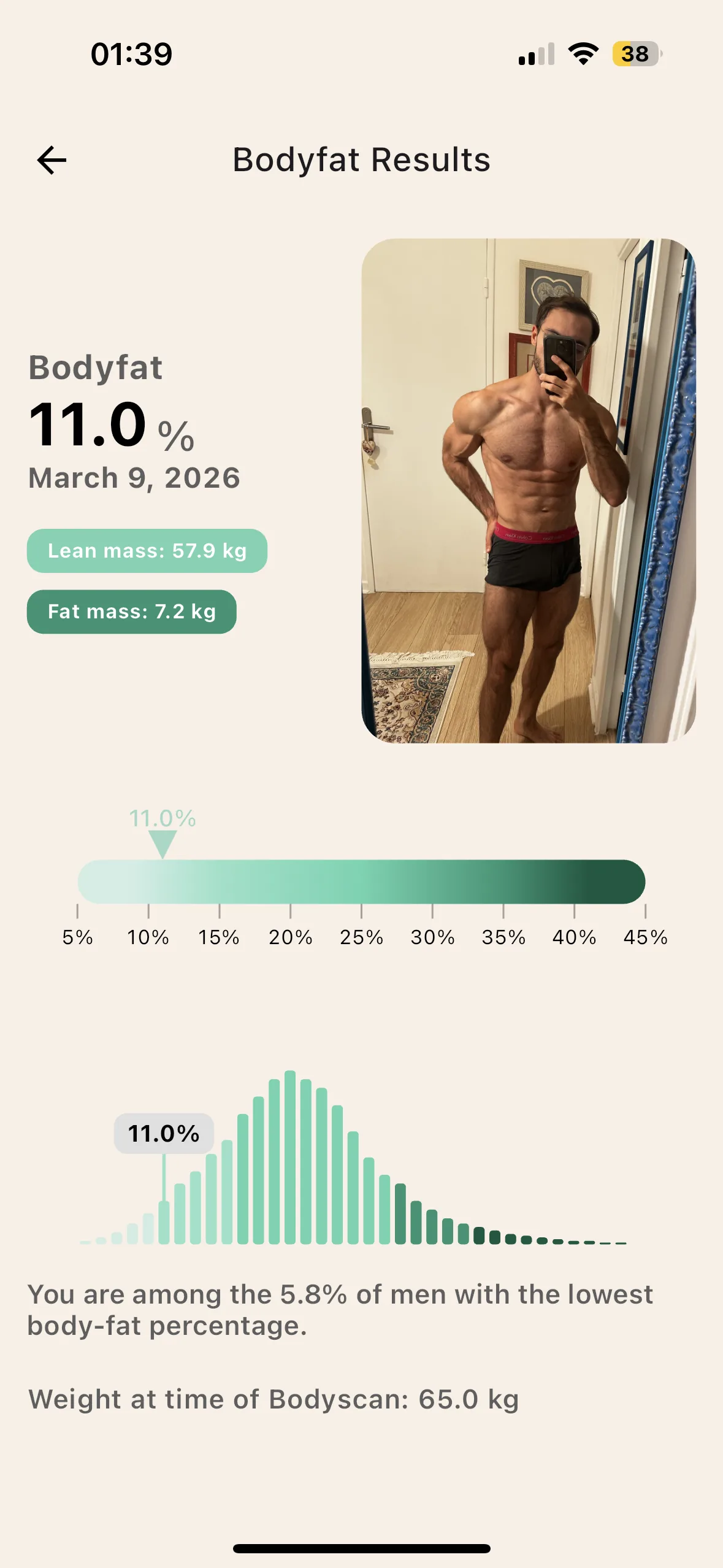
Two options: our tape measure calculator (2 minutes, free), or the BodyScan photo above. Meanwhile, leave the slider on an approximate value: an approximate body fat beats a total-weight calculation.
03 · The scienceWhy your protein is computed on your lean mass
A kilo of fat needs no protein. A kilo of muscle does.
Protein builds and repairs active tissues: muscles, organs, enzymes. Your fat mass consumes almost none. That is why serious recommendations reason in grams per kilo of what matters : lean mass. A total-weight recommendation makes the silent assumption that everyone shares the same body composition, the exact error weight-only BMR formulas make too.
What the literature says, in three landmarks. For building muscle, the Morton meta-analysis (2018, 49 studies, 1,863 subjects) places the useful ceiling around 1.6 g/kg, upper bound of the interval at 2.2: beyond that, no measurable extra gain. When cutting, Helms (2014) recommends 2.3 to 3.1 g per kilo of lean mass, the higher the bigger your deficit and the leaner you already are. And Longland (2016) showed the power of the combo: in a severe deficit with high protein and strength training, subjects lost 4.8 kg of fat while gaining 1.1 kg of muscle in 4 weeks.
Concretely, two 90 kg men: the first at 12 % body fat (79 kg of lean mass), the second at 30 % (63 kg). The generic « 2 g/kg » gives both 180 g. The lean-mass calculation gives about 182 to 245 g to the first when cutting, and 145 to 195 g to the second: the weight-based advice underfeeds the lean athlete and overfeeds the higher body fat profile, in proportions you can see in the muscle retained at the finish line.
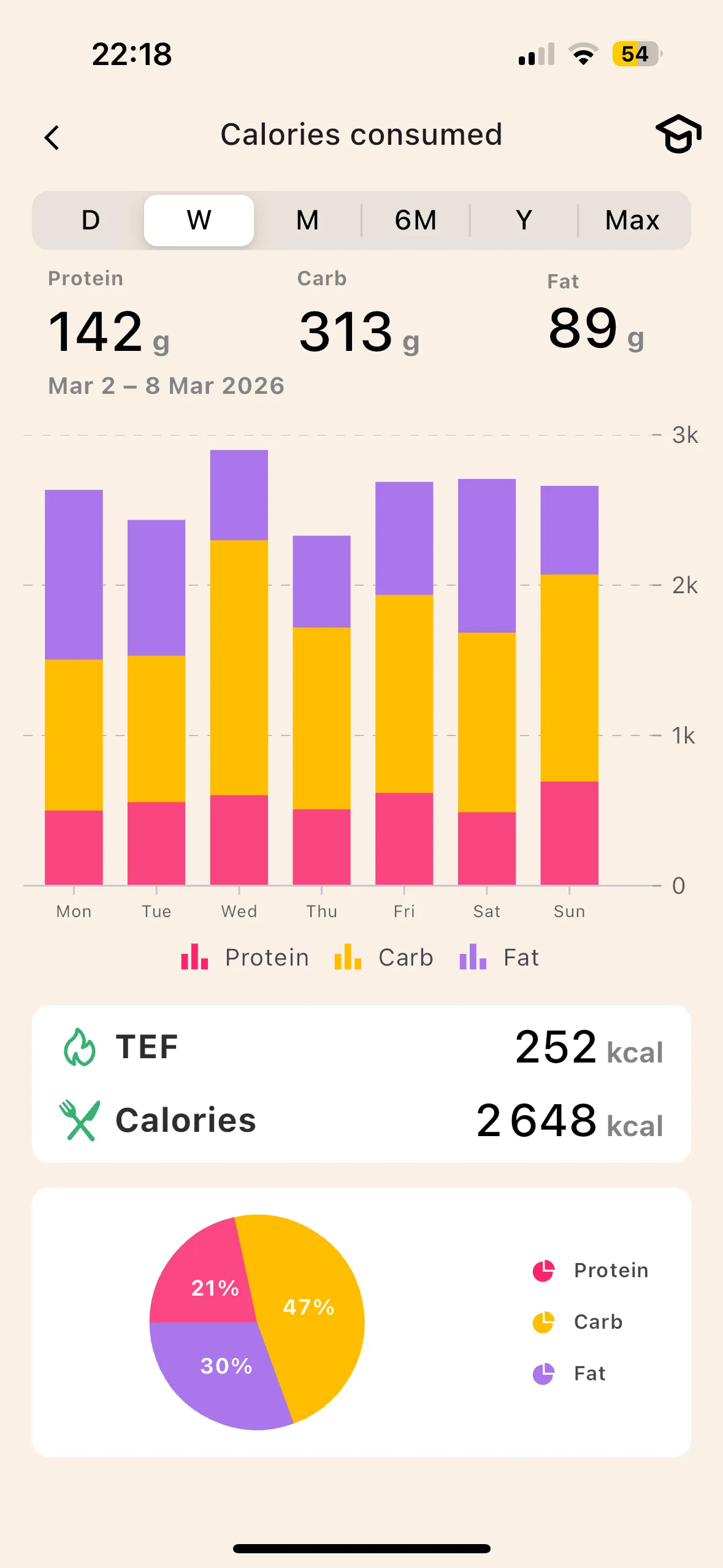
Where does this fit in the equation? Protein is also the macro with the strongest thermic effect : 20 to 30 % of its calories are burned during digestion (versus 5 to 10 % for carbs). In Lean, this effect is counted in the TEF, the 4th brick of TDEE = BMR + NEAT + EAT + TEF, computed on your actually logged macros, not a flat rate.
One last note of honesty: the precision of your range depends on the precision of your body fat. A 5-point body fat error moves your target by about ten grams, which stays small: do not let the quest for the perfect number delay the useful habit, a protein source at every meal starting today.
04 · Three worked profilesThe same bodies as the body fat calculator
The three profiles measured on our body fat calculator, carried through to their protein. The numbers come from the calculator above, you can reproduce them.
She cuts cleanly
The lean athlete cutting
He maintains after his diet
05 · In practiceHit your target without living in the kitchen
A 150 or 180 g target looks high from afar. Spread smartly, it fits in a normal day:
1. A source at every meal
30 to 50 g per serving over 3 to 5 meals. Eggs in the morning, meat or fish at lunch, a high-protein dairy as a snack, a source at dinner: target reached without supplements.
2. Breakfast, the weak link
Toast-juice-coffee = 5 g of protein. Swap for eggs, skyr, cottage cheese or oats + milk: +25 to 35 g from the morning, and a satiety that changes your late mornings.
3. Whey: a tool, not an obligation
One scoop = ~25 g of protein for minimal volume. Useful when your schedule makes a real meal impossible; pointless if your food already covers your range.
4. Vegetarian: doable, with method
Legumes + grains, tofu and tempeh, dairy or fortified alternatives: the target stays reachable by combining sources through the day, with slightly more generous portions.
06 · Myth vs realityKidneys at risk, magic ceiling: what the science says
« Too much protein damages your kidneys »
The idea comes from a real medical topic: with existing kidney disease, protein is restricted. Extrapolated to healthy people, it does not hold: the Devries meta-analysis (2018, 28 controlled trials) finds no difference in kidney function between higher- and lower-protein diets in healthy adults. The disclaimer stands: kidney disease = medical advice before any change.
The real ceiling is usefulness, not danger
The ceiling that matters is elsewhere: beyond your range, extra protein simply builds nothing measurable anymore (inflection point at 1.62 g/kg in Morton 2018). It is not dangerous, it is useless: calories that will be missing from your training carbs or your enjoyment of food.
So the real question is not « can I eat more? » but « do I hit my range every day, weekends included? ». Consistency builds, not spikes.
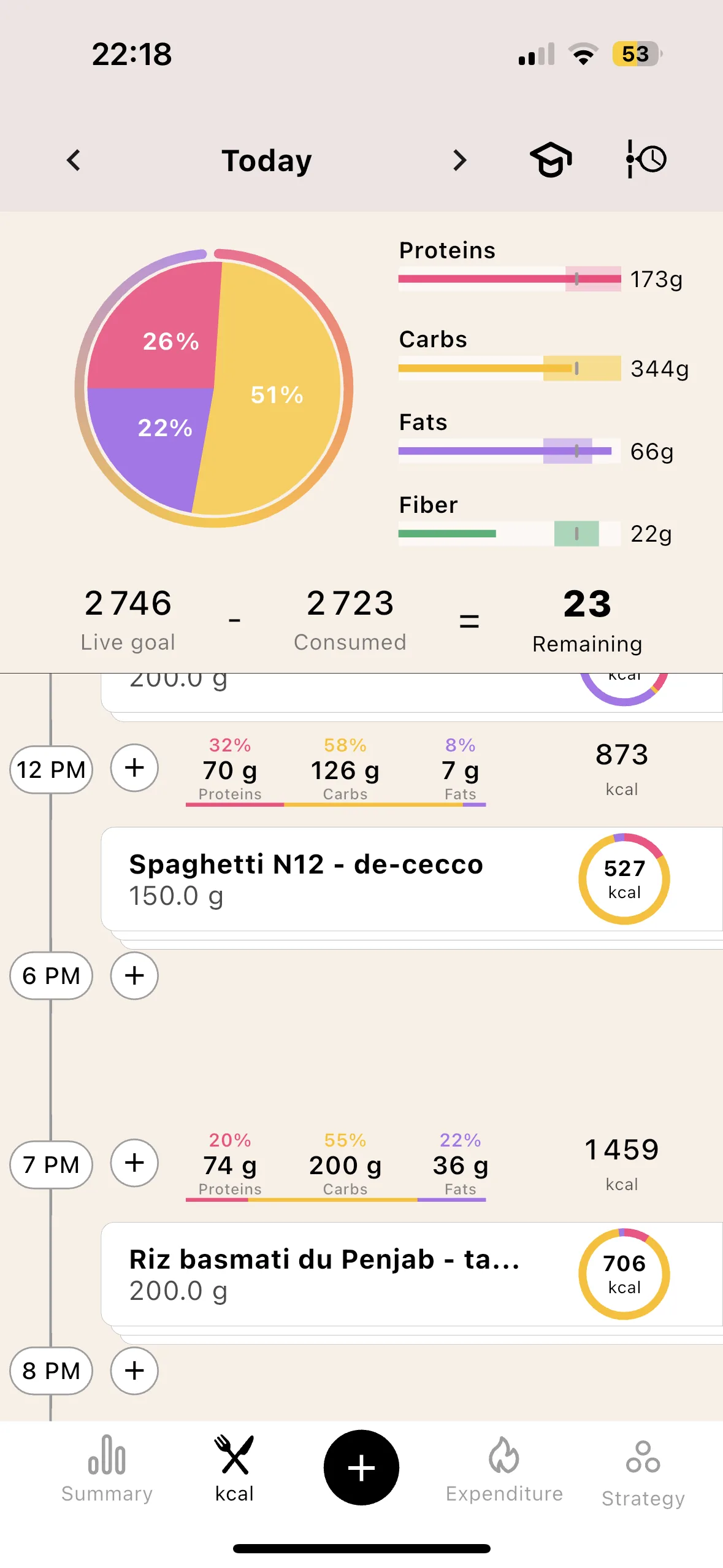
The practical consequence: set your range on your lean mass, hit it daily with real food, and spend your attention on what actually progresses: your training and your consistency. Tracking exists exactly for that: seeing at a glance whether the count is there.
07 · FAQEverything you wonder about protein
How much protein per day to build muscle ?
The reference meta-analysis (Morton 2018, 49 studies) places the useful ceiling around 1.6 g per kilo of body weight, with an upper bound at 2.2 to cover the most demanding responders. Beyond that, no measurable extra gain. On lean mass, this calculator's range gives the equivalent personalized to your composition: calorie surplus and training progression do the rest.
How much protein per day when cutting ?
More than at maintenance: 2.3 to 3.1 g per kilo of lean mass (Helms 2014), the higher the more aggressive your deficit and the leaner you are. In a deficit, protein is the signal telling your body to keep muscle and burn fat: Longland (2016) showed a 4.8 kg fat loss with a 1.1 kg muscle GAIN in 4 weeks in high-protein + strength subjects.
Why compute on lean mass and not total weight ?
Because protein feeds active tissues, not fat mass. A total-weight recommendation underfeeds lean muscular profiles and overfeeds high body fat profiles. Two 90 kg people can be 16 kg of lean mass apart: giving them the same target makes no sense. So you need your body fat: measure it with the tape or the BodyScan, then the math becomes trivial.
Is too much protein dangerous for the kidneys ?
In healthy adults, no: the Devries meta-analysis (2018, 28 controlled trials) finds no difference in kidney function between higher and lower intakes. Protein restriction concerns people with existing kidney disease: in that case, medical advice is mandatory before any dietary change.
Do you need protein right after training ?
The 30-minute « anabolic window » is largely overrated: what matters is your daily total and a reasonable spread over 3 to 5 servings. If your last meal was hours ago, a serving around training makes sense; otherwise, your next meal does the job just fine.
Whey or real food ?
Nutritionally, protein is protein: whey has nothing magical, it is just convenient and low-calorie for its content. Real food additionally brings satiety, micronutrients and pleasure. The good rule: cover the essentials with real food, keep whey for the moments when a meal is not possible.
Can you gain muscle and lose fat at the same time ?
Yes, under certain conditions: beginners, comebacks after a break, or a deficit with high protein and serious strength training (Longland 2016). That is body recomposition. You steer it precisely by tracking your body fat and lean mass rather than weight alone: the scale can stall while your body changes completely.
Does protein make you lose weight ?
Indirectly, it helps a lot: it is the most satiating macro, and 20 to 30% of its calories are burned in its own digestion (thermic effect). At equal calories, a higher-protein diet makes the deficit more sustainable and protects muscle. But the calorie deficit remains the engine: protein is the copilot.
Do women need less protein ?
Per kilo of lean mass, needs are comparable: the difference in total grams simply comes from a lower average lean mass. This calculator's ranges apply to both sexes; your body composition personalizes the number, not your sex in itself.
Does this calculator give an exact prescription ?
No: a target range based on published consensus, personalized by your lean mass and your goal. Precision depends on your body fat's, and the individual optimum varies with training, sleep and deficit. Aim for your range consistently, adjust on your results over 4 to 6 weeks, and with any condition, especially kidney disease, seek medical advice.
Scientific sources
- Morton RW, Murphy KT, McKellar SR, et al. A systematic review, meta-analysis and meta-regression of the effect of protein supplementation on resistance training-induced gains in muscle mass and strength. Br J Sports Med. 2018;52(6):376-384. PubMed 28698222.
- Helms ER, Aragon AA, Fitschen PJ. Evidence-based recommendations for natural bodybuilding contest preparation: nutrition and supplementation. J Int Soc Sports Nutr. 2014;11:20. PubMed 24864135.
- Phillips SM, Van Loon LJ. Dietary protein for athletes: from requirements to optimum adaptation. J Sports Sci. 2011;29 Suppl 1:S29-38. PubMed 22150425.
- Longland TM, Oikawa SY, Mitchell CJ, et al. Higher compared with lower dietary protein during an energy deficit combined with intense exercise promotes greater lean mass gain and fat mass loss. Am J Clin Nutr. 2016;103(3):738-46. PubMed 26817506.
- Devries MC, Sithamparapillai A, Brimble KS, et al. Changes in Kidney Function Do Not Differ between Healthy Adults Consuming Higher- Compared with Lower- or Normal-Protein Diets. J Nutr. 2018;148(11):1760-1775. PubMed 30383278.
Your protein, counted effortlessly
Every logged food (database, barcode, AI photo) fills your protein counter, and your target relies on your lean mass measured by BodyScan. Consistency becomes visible, day after day. Free download, 7-day trial on the annual plan.